Nursing | Research | Career Development and Education
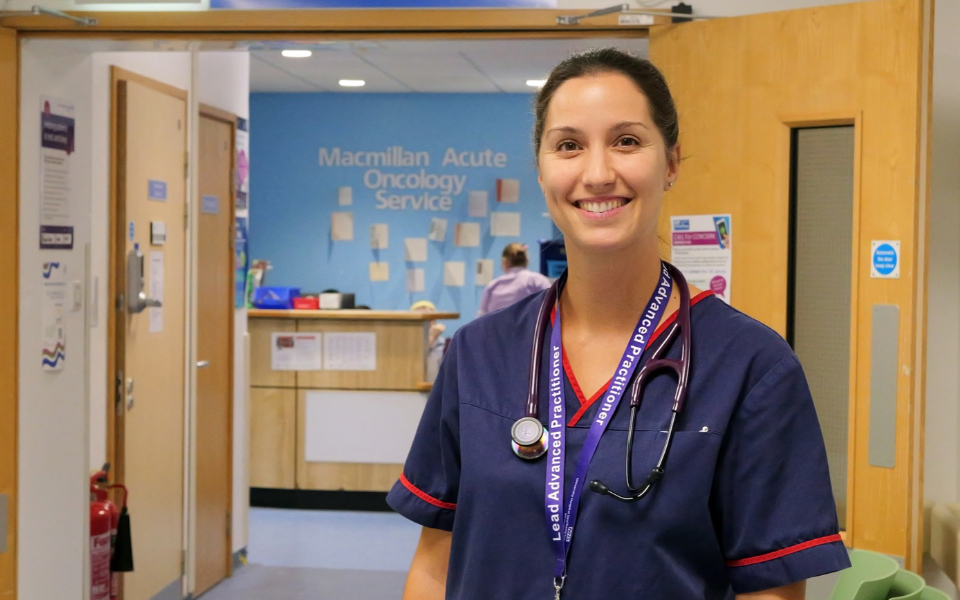
Building a Career in Cancer Care- Ana's Journey as an Advanced Clinical Practitioner
Healthcare is constantly evolving, creating new opportunities for clinical professionals to develop their expertise and deliver care in different ways. One role helping to shape this future is the Advanced Clinical Practitioner (ACP), a healthcare professional educated to master's level or equivalent who works across four key pillars of practice: clinical care, leadership, education and research. Together, these pillars enable ACPs to care for patients directly while also helping to develop colleagues, improve services and shape the future of healthcare.
Within cancer care, these elements come together to support patients through complex healthcare journeys while driving improvements in services and patient outcomes. As an Advanced Clinical Practitioner at UHS, Ana combines advanced clinical decision-making with a commitment to innovation, education and continuous service development.
In this interview, Ana reflects on her career journey, the experiences that led her into advanced clinical practice, and how the role enables her to make a meaningful impact for patients, colleagues and the wider healthcare system.
Thinking back to the start of your career, what inspired you to pursue nursing?
Caring for others has always been important to me, and from a young age I knew I wanted a career where I could make a positive difference in people's lives. Nursing offered that opportunity, allowing me to combine compassion, knowledge, and practical skills to provide support and care for patients and their families.
Nursing offers many different career paths. What opportunities have helped shape your journey so far, and where do you hope your career will take you next?
Working in cancer care has provided many opportunities to develop clinically, academically and as a leader. Progressing into Advanced Clinical Practice (ACP) has allowed me to expand my skills in assessment, diagnosis, and decision-making. Going forward, I hope to continue developing cancer services, supporting ACP workforce growth, and improving patient care and outcomes.
What makes Advanced Clinical Practice (ACP) an attractive career pathway for healthcare professionals looking to develop their careers?
Advanced Clinical Practice offers the opportunity to work at a higher level of autonomy while continuing to provide direct patient care. It combines clinical expertise with leadership, education and research, making it a rewarding and varied career pathway for healthcare professionals who enjoy continuous learning and development.
What's something about your role that people are often surprised to learn ACPs do?
Many people are surprised to learn that ACPs can independently assess patients, request and interpret investigations, diagnose, and develop management plans. We work closely with multidisciplinary teams and often provide care that may be associated with other professions, such as doctors. What people often don't realise is that our role extends beyond clinical practice. ACPs also contribute to education, research, leadership and service development, helping to improve patient care and shape future services.
Cancer care is constantly evolving. How has your role changed over the last few years, and what excites you most about its future?
Over the last few years, I have seen both cancer care and the ACP role develop significantly. I particularly enjoy the variety the role offers and the opportunity to contribute to service development as well as direct patient care. I am excited to see how new treatments and innovations continue to improve outcomes and quality of life for people living with cancer.
What's one skill or quality that people might not expect to be essential for success as an ACP in cancer care?
For me, one of the most important qualities is remembering where I started. Although my role has evolved a great deal, the nursing values of compassion, advocacy and patient-centred care continue to guide my practice every day.
If someone is considering a career as an ACP, what opportunities for growth and development are they often unaware of?
Many people don't realise the opportunities available beyond direct patient care. One of the most rewarding aspects of being an ACP is the variety the role offers. Alongside caring for patients, there are opportunities to support colleagues, contribute to service improvements and continue learning and developing throughout your career. This variety creates many opportunities for both personal and professional growth.
If you could invite the public to spend one day in your shoes, what part of your role do you think would find most unexpected or inspiring?
I think people would be surprised by the variety of the role and how no two days are ever the same. In a single day, I may assess acutely unwell patients, support difficult decision-making, work alongside different healthcare professionals, and provide reassurance to patients and families. I hope it would inspire them to see the positive difference we can make during some of the most challenging moments in people's lives.
Innovation in healthcare is often associated with technology or research, but some of the most meaningful advancements come from the people delivering care every day.
As an Advanced Clinical Practitioner, Ana's role extends far beyond the patients she sees each day. Through her work supporting colleagues, improving services and advancing cancer care, she helps make a lasting impact on patients, teams and the wider healthcare system.
Her story highlights how Advanced Clinical Practitioners bring together expertise, innovation and compassionate care to meet the changing needs of patients and healthcare services alike.
If you're looking for a career that offers opportunities to develop advanced clinical skills, influence service improvement and make a lasting impact on patient care, explore the opportunities available at UHS.
Interested in taking the next step in your healthcare career? Click here to explore our current opportunities at UHS and discover what's possible.
Related Blogs
From Clinical Expertise to Service Innovation: Natalia's Specialist Doctor Career Journey
More
The Career She Always Wanted, Just Not the Way She Expected: Kim's HCSW Career Journey
More
Meet the Pharmacists Shaping the Future of Healthcare at UHS
More