Medical | Career Development and Education
From Clinical Expertise to Service Innovation: Natalia's Specialist Doctor Career Journey
Every day across the NHS, Specialty, Associate Specialists and Specialist (SAS) doctors make a vital contribution to patient care, clinical leadership, education and innovation. Their expertise supports services across a wide range of specialities, helping to deliver high-quality care while improving experiences for both patients and colleagues.
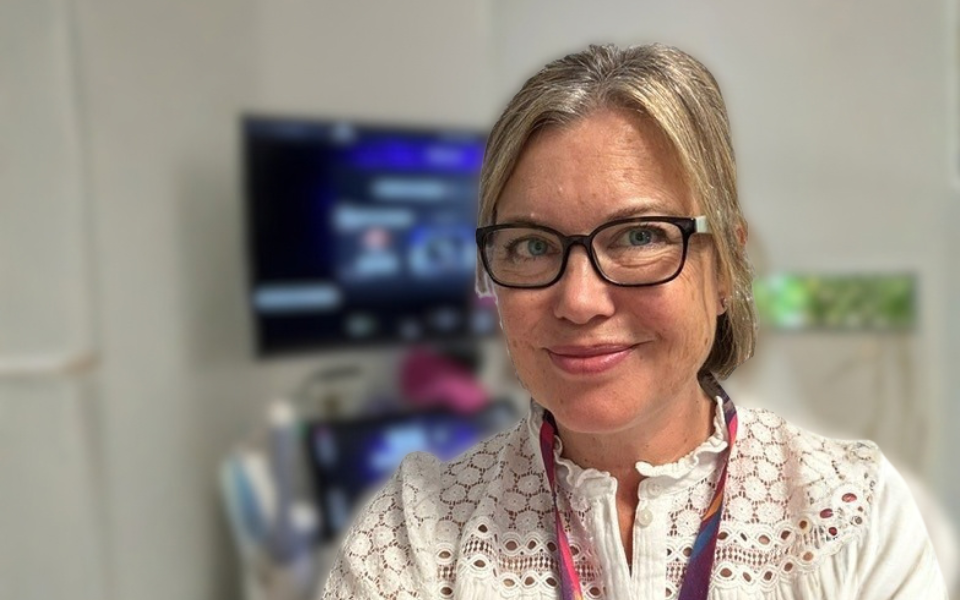
For Dr Natalia Rosello, Speciality Doctor in gynaecology becoming a Specialist Grade Doctor in gynaecology wasn't a straightforward journey. What began as a childhood fascination with medicine evolved into a career spanning clinical practice, research, teaching, service development and specialist ultrasound expertise. Along the way, she discovered a career path that enabled her to pursue a field she loves while balancing family life and developing as a senior clinical leader.
Today, Natalia plays a key role in advancing gynaecological ultrasound services, leading improvements that help patients receive faster diagnoses, reduce anxiety and access the right care sooner. Her story highlights the breadth of opportunity available within SAS careers and the significant impact these roles have on both healthcare services and patient outcomes.
What inspired you to become an SAS doctor, and what do you enjoy most about the role?
I always wanted to be a doctor, and I was fascinated by medicine (animal and human) and diagnostics from an early age, obsessed with James Herriot and Casualty growing up.
As a medical student I decided that a career in obstetrics and gynaecology (obs and gynae) was for me and pursued this once qualifying. Life as a junior doctor in the late 1990s was hard, this was just before the European Working Time Directive (limiting NHS doctors to an average 48-hour working week); on-calls were long and it was challenging and competitive to get the national training number (For doctors training in the NHS, a training number is a unique ID assigned to doctors in NHS specialty training) in obs and gynae. The positive was the ‘firm’ system (The traditional NHS 'firm' was a team led by one Consultant then tiered junior doctors in a team with registrars, senior house officers and junior house officers working closely together for six months.) was still in place, and this provided invaluable support, mentorship and friendship.
I considered leaving medicine at this point, but I fell on my feet and found myself in a unit where I learnt to scan as it was a passion of the Consultant I worked with. It was an innovative unit, and I stayed there for 5 years as a research/clinical fellow whilst I had my family (four children - it seemed like a good idea at the time!) and found my niche in early pregnancy and gynae scanning.
After this we left London and moved to Bedfordshire where my career took an intentional back seat so I could raise the family and support my husband’s surgical training. I was working most of this time part-time as a clinical fellow in Bedford’s early pregnancy unit. I had never heard of the terms SAS Doctor at this point
We moved south once my husband became a Consultant and, once again, I wasconsidering a change of career, but through friends from previous jobs, I was put in contact with an Associate Specialist at Princess Anne Hospital (PAH), who was an expert in gynae scanning and lead here at UHS.
She was the one who encouraged me to become a Specialty Doctor and in 2013 I interviewed and became a Specialty Doctor in gynaecology. 10 Years later, in 2023 I interviewed and was successful in becoming a Specialist Grade Doctor, a senior role. The SAS grade has been perfect for me. I work part time, 7.6 programmed activities (PAs) a week and finally felt I could balance family life, work and personal time.
I work in a specialty I love, practice a skill I am good at and feel I really contribute to the gynaecology department here at the PAH and the patients it serves.
SAS careers are incredibly varied. What opportunities or achievements have been most rewarding during your SAS career?
My family are my greatest achievement as I mentioned and this role has given me the opportunity to continue my career which I have worked hard to pursue and be there for my children whilst[ choosing to support my husband’s surgical career- a balance that is difficult to maintain in conventional medical training. As a Specialist Grade Doctor, I have a senior leadership role in our department and now feel I am very much a part of the senior/Consultant team. This has taken a while, ‘imposter syndrome’ is very real!
What I do is niche, but I am an expert in my field. I help to run the ultrasound department at the PAH and am involved in teaching, training, research and audit. Being an SAS doctor is very much not just ‘service provision’ as many other doctors assume the role is. As the lead in gynaecological scanning, I have the autonomy to be able to streamline the advanced scanning services for endometriosis and improve the service provision for the ovarian two-week wait (2ww) Diagnostic scan clinic (see below).
All in all, I have the opportunities of an NHS Consultant and if I wanted other leadership or clinical managerial roles, these would be available for me to pursue. I think that this is the main point that people are often surprised by these opportunities within the SAS grade particularly the leadership roles. We are not doctors who have failed to get a Consultant post but mostly doctors who have chosen this grade for the lifestyle and the opportunities above that it offers.If you could give the public a behind-the-scenes look at one aspect of your role for a day, what would you choose and why?
The Diagnostic scan clinic is the aspect of my job that I feel makes the most difference and there is a lot going on behind the scenes to make it work as well as it does. This clinic was originally set up by my predecessor and is a triage clinic where we see patients referred on the 2ww ovarian pathway with suspected ovarian cancer.
Before this all-patient referrals were directly to oncology, seen by a Consultant, imaging arranged and then follow up after these have been reported which could take over month to get a diagnosis from referral.
Now we take a history and use our scanning skills at their initial appointment to decide if they need to stay on the 2ww pathway and be referred to MDT (multidisciplinary team)/ oncology or, refer on to benign gynae, other specialities or back to the GP. Recent audit has shown that almost 60% of these patients referred are taken out of the 2ww pathway on the day of the clinic, so patients are seen by appropriate clinicians in a timely fashion.
Since I have been managing this clinic, one service improvement we started during the pandemic is that we have streamlined the service further by organising the CT or MRI scans on the day they attend, prior to oncology review which has decreased the time to diagnosis by at least 10 days. We have changed the name of the clinic from the Ovarian Cancer 2ww clinic to the 2ww diagnostic scan clinic and we have recently amended the appointment letter by removing the words ‘oncology and cancer’ to try help to reduce anxiety as patients are often understandably very emotional attending clinic particularly if the referrer hasn’t spoken to the patient about the potential diagnosis prior to the appointment.
Being a Specialist Grade Doctor has allowed me to initiate these changes, improve our service and hopefully make what is already a stressful situation into a more positive experience and clinic outcomes.
Natalia's career demonstrates the expertise, leadership and innovation that SAS doctors bring to the NHS every day. From improving diagnostic pathways and reducing times to diagnosis to teaching future clinicians and shaping specialist services, SAS doctors play a crucial role in delivering exceptional patient care.
Her story also highlights something equally important: there is no single route to a successful medical career. For many doctors, the SAS pathway offers opportunities to develop specialist expertise, take on leadership responsibilities, contribute to research and service improvement, and achieve a balance that works for their professional and personal lives.
Whether you're looking to develop your specialist expertise, expand your leadership experience or take the next step in your medical career, there are a wide range of opportunities available at UHS.
Click here to discover our latest medical vacancies and explore where a career at UHS could take you.
Related Blogs
The Career She Always Wanted, Just Not the Way She Expected: Kim's HCSW Career Journey
More
Meet the Pharmacists Shaping the Future of Healthcare at UHS
More
The People Behind the Bypass: Helen on Perfusion, Pressure and Career Progression
More