Medical
Careers in Medicine: UHS Doctors Share Their Journeys, Insights and Advice
At University Hospital Southampton, our doctors embody curiosity, compassion and an unwavering commitment to care. Every day, they step into moments that matter, providing calm in uncertainty, offering expertise when it’s needed most, and continuously advancing the way we diagnose, treat and support our communities.
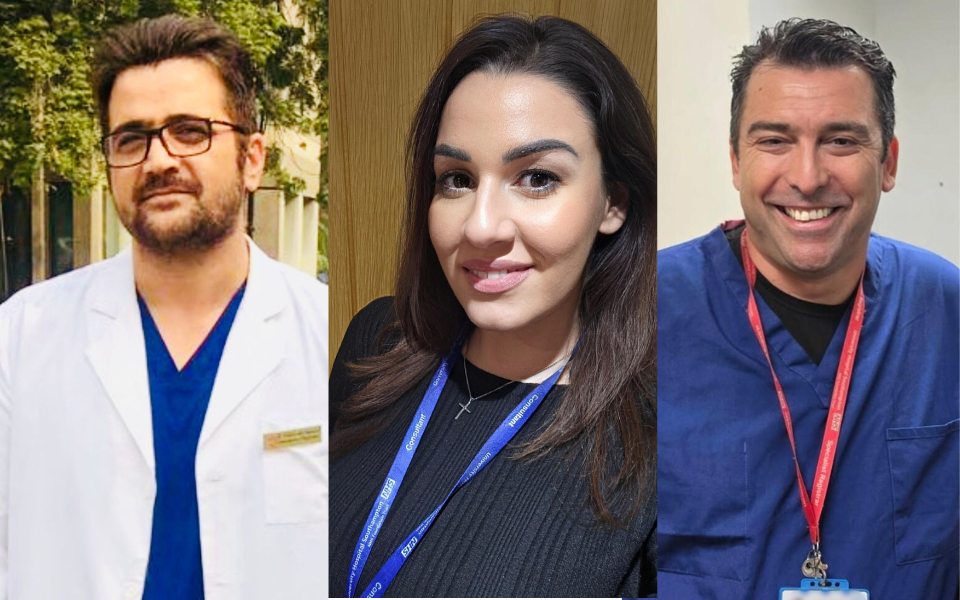
In this special Q&A, three of our doctors at different stages of their careers share what first drew them to medicine, how their journeys have shaped them, and what continues to inspire them every day. Their stories reveal the heart of what it means to care, to learn, and to lead in a constantly evolving healthcare landscape.
What initially inspired you to pursue a career in medicine, and how has your professional journey shaped the doctor you are today?
Khalid, Specialty Doctor in ED: I was drawn to medicine early on by a curiosity about how the human body works and a desire to be useful in moments that truly matter. Over time, that curiosity evolved into a deeper sense of responsibility toward people at their most vulnerable.
Training in demanding environments and later working in the NHS has shown me that medicine is not just about knowledge or procedures; it is about presence, judgement, and compassion. Emergency Medicine, in particular, has taught me humility, resilience, and the importance of calm leadership in uncertainty. It has shaped me into a doctor who values clarity, teamwork, and empathy as much as clinical skills.
Loukiani, Locum Consultant Oncoplastic Breast Surgeon: I was drawn to medicine because of its unique balance between science and human connection. Growing up and training in Greece, and later continuing my training in the UK, I developed a strong appreciation for compassionate, patient-centred care across different healthcare systems.
My journey, particularly in breast and oncoplastic surgery, has shaped me into a doctor who values not only technical excellence, but also empathy, communication, and trust. Supporting patients through some of the most challenging moments in their lives is both a privilege and a responsibility. It’s this combination of skill and human connection that continues to inspire me every day.
Georgios, Senior Fellow in Cardiothoracic Surgery: My interest in medicine came from wanting to work in a field where you can make a clear and immediate difference to people’s lives. During my training, I was drawn to cardiothoracic surgery because of its complexity and the level of responsibility involved. It’s a specialty that requires precision, focus, and the ability to make important decisions under pressure.
The journey has been demanding, but it has shaped me to be disciplined, consistent, and detail-oriented. It has also reinforced the importance of teamwork and clear communication in achieving the best outcomes for patients.
As healthcare continues to evolve, how do you view your role within the wider system, and how do multidisciplinary collaborations influence the outcomes you achieve?
Khalid: I think my role is really about bringing some calm and clarity when things feel uncertain. In emergency medicine, patients often come in at their worst, and even small things like how you speak to them and how you carry yourself, can make a big difference.
What’s become very clear to me over time is that none of us works in isolation. Every good outcome is a team effort. You rely on nurses, paramedics, porters, radiographers, anaesthetists, everyone plays a part, and you learn to trust each other.
For me, multidisciplinary working isn’t just about improving outcomes on paper. It makes the environment safer, reduces stress for everyone involved, and most importantly, helps patients feel looked after during some of the most difficult moments of their lives.
Loukiani: Healthcare today is truly a team effort, and I see my role as part of a wider, highly collaborative system. In breast surgery, outcomes are significantly improved through close multidisciplinary working with radiologists, oncologists, pathologists, and specialist nurses.
Each team member brings a unique perspective, allowing us to deliver personalised and evidence-based care. This collaborative approach ensures that patients are supported at every stage of their journey. It reinforces that the best outcomes are achieved through shared expertise and strong communication.
Georgios: I see my role as part of a coordinated system where effective teamwork is essential to delivering safe and high-quality care. In cardiothoracic surgery, patient management depends heavily on close collaboration with cardiology, anaesthetics, intensive care, and imaging teams.
Decisions are rarely made in isolation, and multidisciplinary input ensures that each patient receives the most appropriate treatment strategy. This structured approach improves outcomes and helps maintain consistency in complex clinical scenarios.
Can you share a moment in patient care that had a profound impact on you or reshaped your approach to practice?
Khalid: There was an early experience in my emergency career involving a critically unwell patient where the defining factor was not one dramatic intervention, but how the team worked together under pressure. It reminded me that medicine is rarely about heroic moments, it is about preparation, communication, and quiet coordination.
Since then, I focus deeply on team dynamics, listening carefully, and creating an environment where everyone feels confident to speak up.
Loukiani: One moment that stayed with me was realising how much impact simple human connection can have during a difficult point in a patient’s journey. While the clinical aspects were important, what made the greatest difference was taking the time to listen, reassure, and be present.
It reminded me that patients often remember how they were made to feel just as much as the treatment they received. Since then, I have been even more mindful of the importance of communication and continuity of care. It continues to shape how I approach every patient interaction.
Georgios: One experience that had a lasting impact was being involved in the care of a critically unwell patient where outcomes depended on careful coordination across multiple teams.
It highlighted how important timing, communication, and preparation are in achieving the best possible result. It also reinforced the idea that success in surgery is not only about the operation itself, but about the entire pathway of care. Since then, I have placed even greater emphasis on planning and teamwork.
What current developments in your field, whether technological, scientific, or systemic, have the potential to redefine patient care in the coming decade?
Khalid: I believe the future of emergency medicine will be shaped by both technology and system thinking. Tools like AI-supported triage and real-time data systems will help us recognise risk earlier and reduce delays. But equally important is the human side, stronger training systems, better communication pathways, and global collaboration. The real transformation will come from combining innovation with empathy.
Loukiani: Breast surgery is evolving rapidly, particularly with advances in oncoplastic techniques, personalised treatment pathways, and minimally invasive approaches. There is an increasing focus on tailoring care to each individual patient, aiming for excellent oncological outcomes while also prioritising quality of life and aesthetic results.
Developments in imaging, data-driven decision-making, and the growing role of artificial intelligence are also helping refine diagnosis and treatment planning. Clinical trials continue to shape evidence-based practice and reduce overtreatment. Together, these innovations are making care more precise, less invasive, and more holistic, and will significantly enhance the patient experience in the coming decade.
Georgios: Cardiothoracic surgery is evolving significantly, particularly with the wider adoption of minimally invasive and robotic-assisted techniques, as well as the expansion of endovascular and hybrid procedures. These approaches are allowing increasingly complex interventions to be performed with reduced surgical trauma.
Advances in imaging and perioperative planning, including the use of artificial intelligence, are also improving precision and decision-making. In parallel, there is a continued focus on optimising perioperative care and recovery pathways. Altogether, these developments are contributing to safer surgery, shorter hospital stays, and more consistent outcomes.
What makes UHS a meaningful place for you to practice medicine, and how has the environment or culture here shaped your clinical journey?
Khalid: UHS has been an important chapter in my journey. The culture here encourages learning, reflection, and mutual respect, which has supported both my clinical growth and personal confidence. I value working in an environment where colleagues genuinely support each other, especially during difficult shifts. It has reminded me that medicine is never an individual effort, it is always collective.
Loukiani: UHS has been a very meaningful place in my clinical journey, both professionally and personally. It is an environment where teamwork, innovation, and patient-centred care are genuinely prioritised. Over the past few years, I have been supported to grow in confidence and independence within a highly collaborative and forward-thinking team. The culture encourages continuous learning, open discussion, and striving for excellence. Being part of such a dedicated team has reinforced my commitment to delivering high-quality, compassionate care.
Georgios: UHS has been an important place in my clinical development, mainly because of the variety and complexity of cases we manage. It’s a busy environment, but one where teamwork works well in practice, particularly across specialties. That has made a big difference in how patients are managed day to day. Being part of a team where people are approachable and willing to support each other has helped me continue to develop both clinically and professionally. It’s an environment that encourages you to improve and take responsibility, which I’ve found particularly valuable.
What advice would you give to medical students or junior doctors who aspire to build a meaningful and fulfilling career in medicine?
Khalid: Don’t lose yourself in the process.
Medicine can quietly turn into constant rushing, always thinking and problem-solving, and it’s easy to forget why you started. You don’t have to know everything early on. You don’t have to prove yourself every single day. Just show up, be genuine, and care.
Learn your basics well like how to talk to patients, how to really listen, how to notice small things others miss. Those matter more than you think. Skills will come with time, confidence will come with experience, but the way you treat people, that stays with them forever. And try not to let patients become “cases” instead of someone who’s scared, in pain, and trusting you completely. Try to hold on to that human side. It’s what will keep you grounded when everything else gets overwhelming.
Most importantly, be kind to yourself. You will make mistakes. You will doubt yourself. Some days will feel heavy. That doesn’t mean you’re not good enough, it means you’re human. Take your time. This isn’t a race. Just keep learning, keep caring, and don’t let the system harden the part of you that made you choose this path in the first place.
Loukiani: I would encourage them to stay curious, be open to learning, and take the time to discover what truly motivates them within medicine. Building strong clinical skills is essential, but so is developing communication, empathy, and resilience.
Seek out supportive mentors and environments where you can grow and feel challenged. Don’t be afraid to step outside your comfort zone, as this is often where the most meaningful learning happens. Most importantly, hold onto your sense of purpose, it will guide you through both the challenges and the rewards of this career.
Georgios: Focus on getting your basics right and be prepared to put in the time. There’s no real shortcut to becoming confident in your practice. Try to choose a specialty that genuinely holds your interest, because that’s what will keep you going when training becomes demanding.
Don’t be afraid to ask questions and learn from the people around you, especially in busy clinical environments. Being reliable and working well within a team matters just as much as technical ability. Over time, those habits make a big difference in how you develop.
The perspectives shared by Khalid, Loukiani and Georgios remind us that medicine is more than a career, it’s a calling built on humanity, collaboration and continuous growth. Whether navigating complex surgeries, supporting patients through vulnerable moments, or driving advancements that will shape the future of healthcare, our doctors represent the very best of what UHS stands for.
If their experiences have inspired you to take the next step in yours, we’d be delighted to support your journey.
Click here to explore the opportunities waiting for you at UHS.
Related Blogs
The Career She Always Wanted, Just Not the Way She Expected: Kim's HCSW Career Journey
More
Meet the Pharmacists Shaping the Future of Healthcare at UHS
More
The People Behind the Bypass: Helen on Perfusion, Pressure and Career Progression
More